
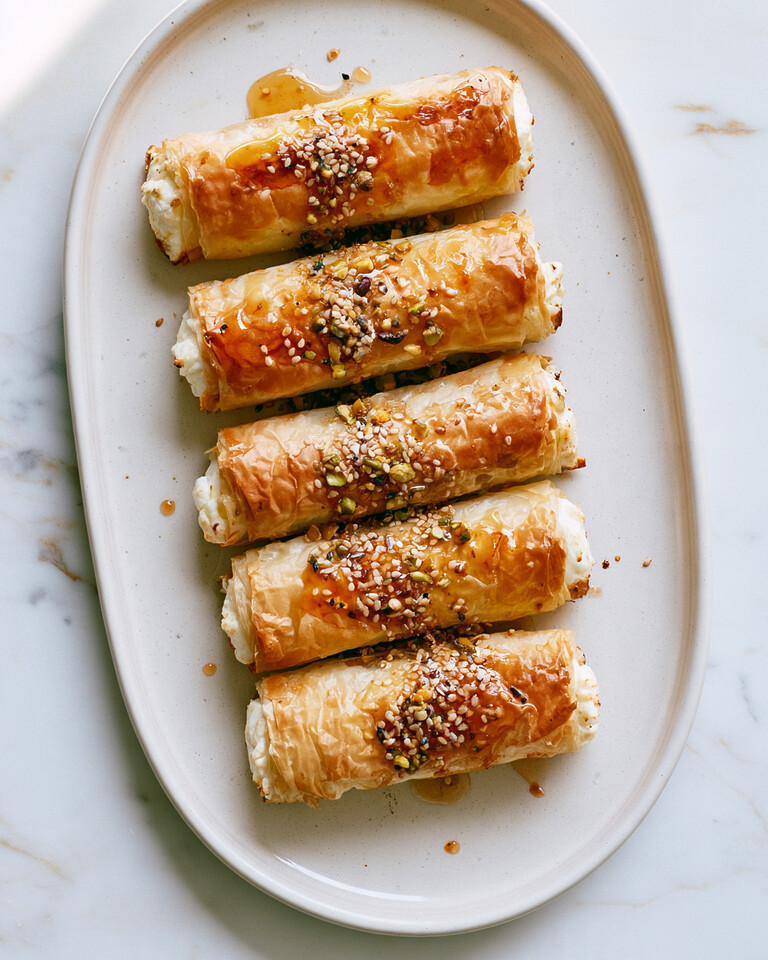
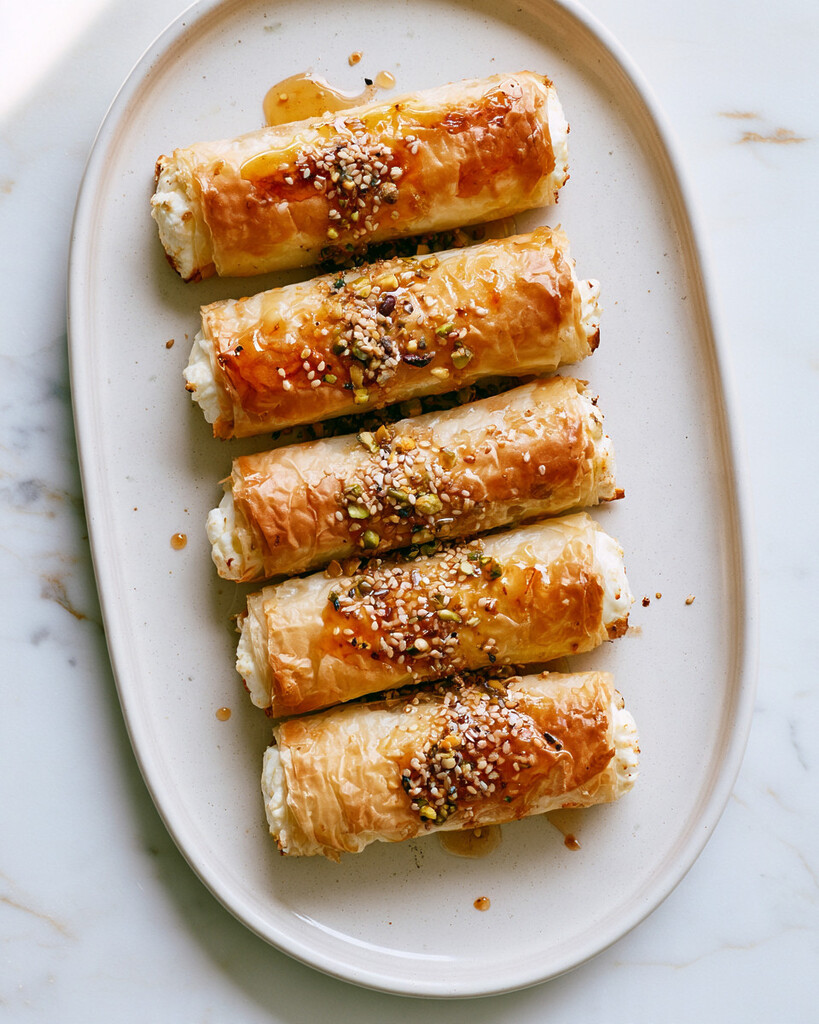
These crispy phyllo feta rolls wrap generous batons of tangy cheese in layers of golden pastry for a fast appetizer. I brush every sheet with a garlic-lemon butter before baking, guaranteeing a shatteringly crisp, savory crunch right before you taste the warm honey.
Infuse the fat first. Do not place raw aromatics directly against the cheese. When you whisk fresh zest and grated garlic right into the liquid butter, the brush carries those flavors across the entire surface of the dough. The heat of the 400°F oven gently cooks the sharp bite out of the garlic, leaving behind a mellow, fragrant coating on every single layer.
Portion the block evenly. Cut the cheese into ten equal pieces. You need sturdy, three-quarter-inch thick sticks that hold their shape, so whisk your dill and zest into the melted butter now to let the flavors meld while you set up the station.
Keep the dough covered. Phyllo dries out fast. If you leave the stack exposed, the edges will turn brittle and flake apart before you can fold them, so I always drape a lightly damp towel over the unused sheets while I work.
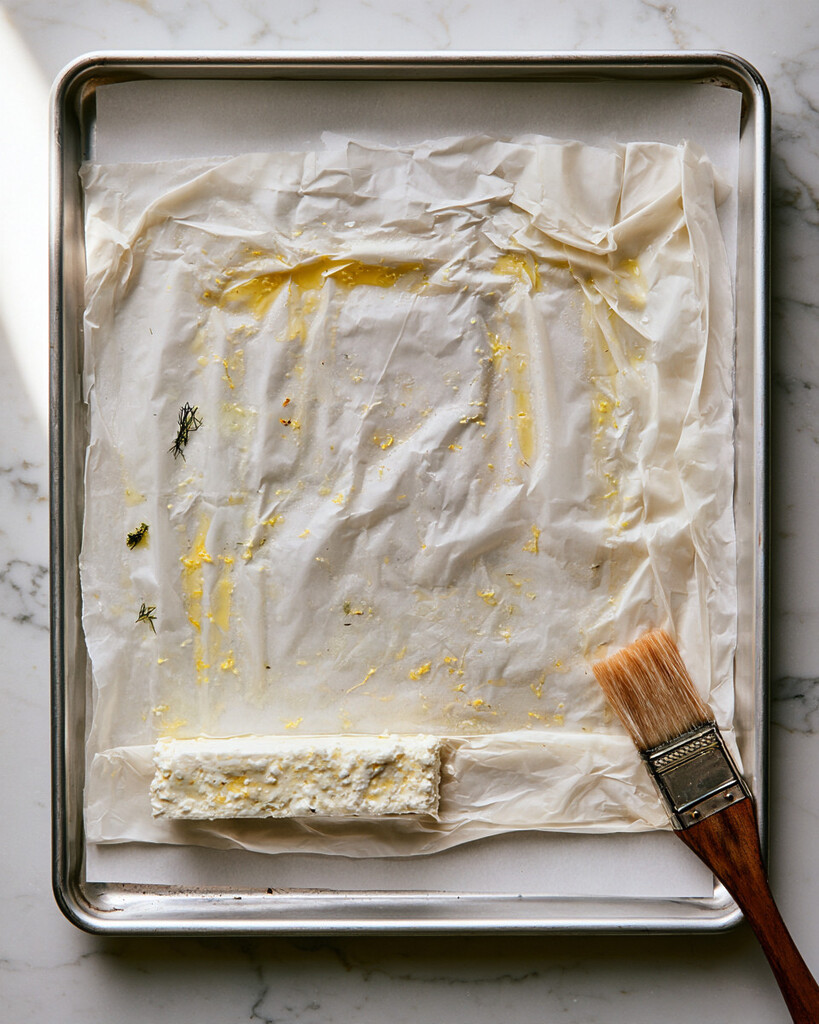
Brush the entire sheet. Fold it in half crosswise. Place your cheese two inches from the bottom edge, fold the bottom up, tuck the left and right sides in tightly, and roll upward like a burrito until you have a snug cylinder.
Set them seam-side down. Sprinkle the tops with mixed sesame seeds. Bake them for 18 to 20 minutes, pulling the pan from the oven when the outer layer looks deeply browned and the edges pull away slightly from the cheese.
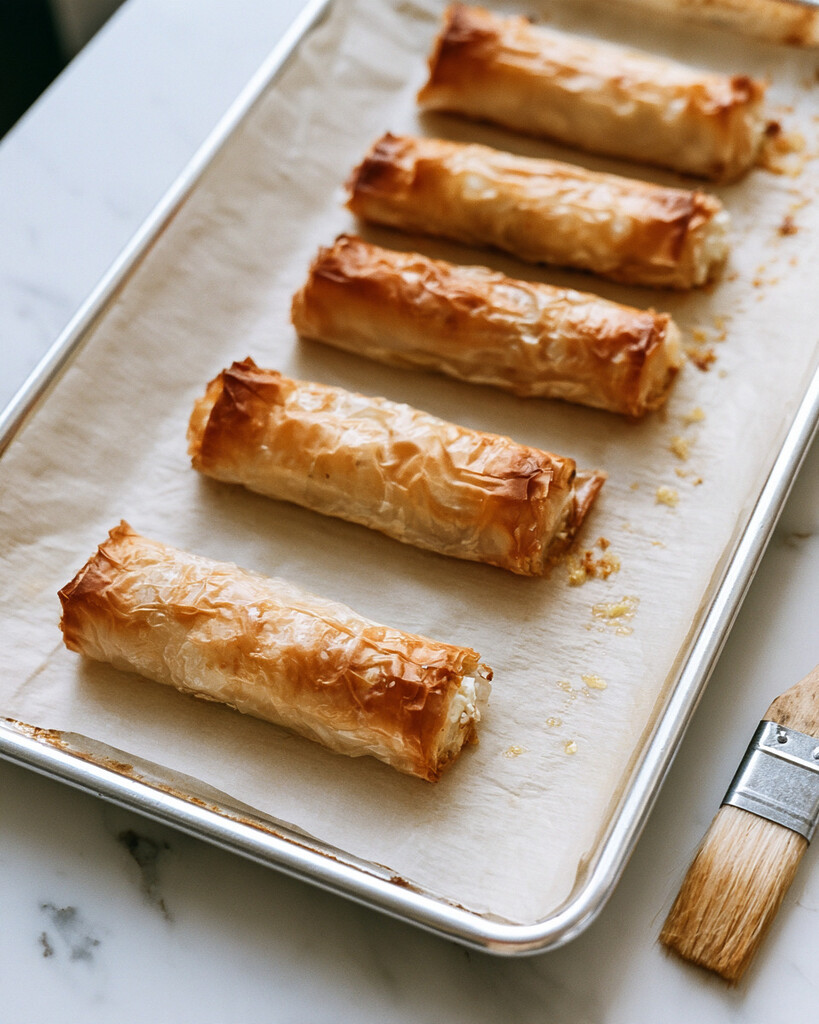
Move them while they are hot. Do not wait for the tray to cool. Transfer the baked rolls straight to a platter, immediately drizzle the slightly warmed hot honey generously over the tops, and scatter the chopped pistachios so they physically stick to the warm syrup.
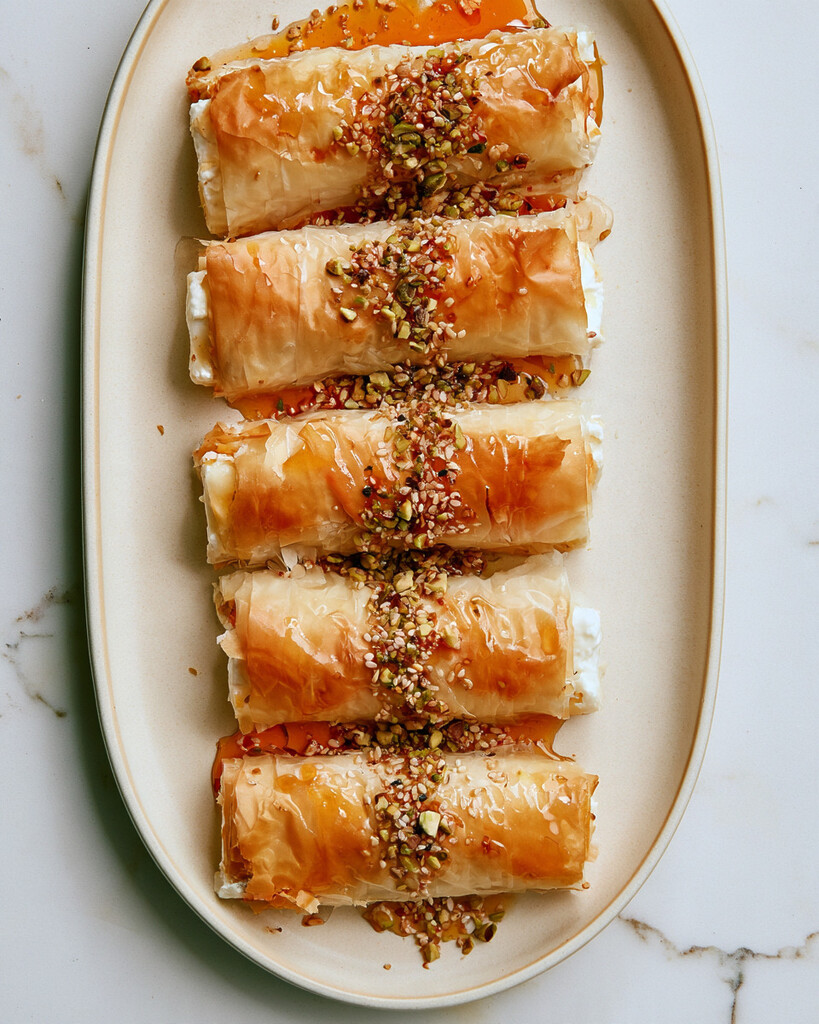
No, crumbling prevents a tight wrap. You need a solid block of whole-milk feta to cut into sturdy sticks that will not spill out of the pastry in the oven.
Standard honey works well if you prefer no heat. Just warm it slightly so it pours easily over the crushed pistachios.
These bake up reliably fast, making them an incredibly sturdy appetizer when guests are walking through the door. I prefer serving them immediately while the pastry shatters loudly and the honey is still warm to the touch.