

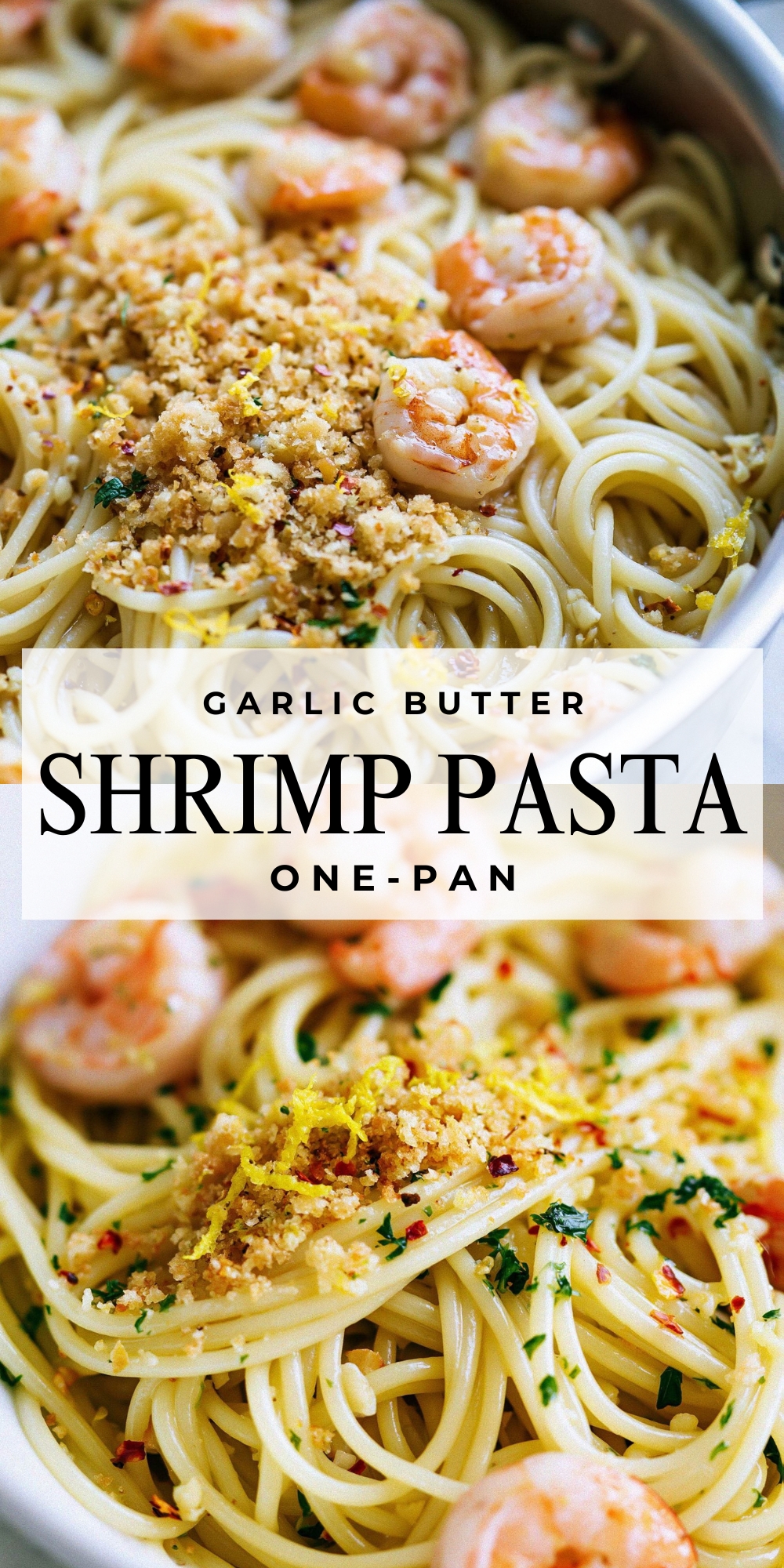
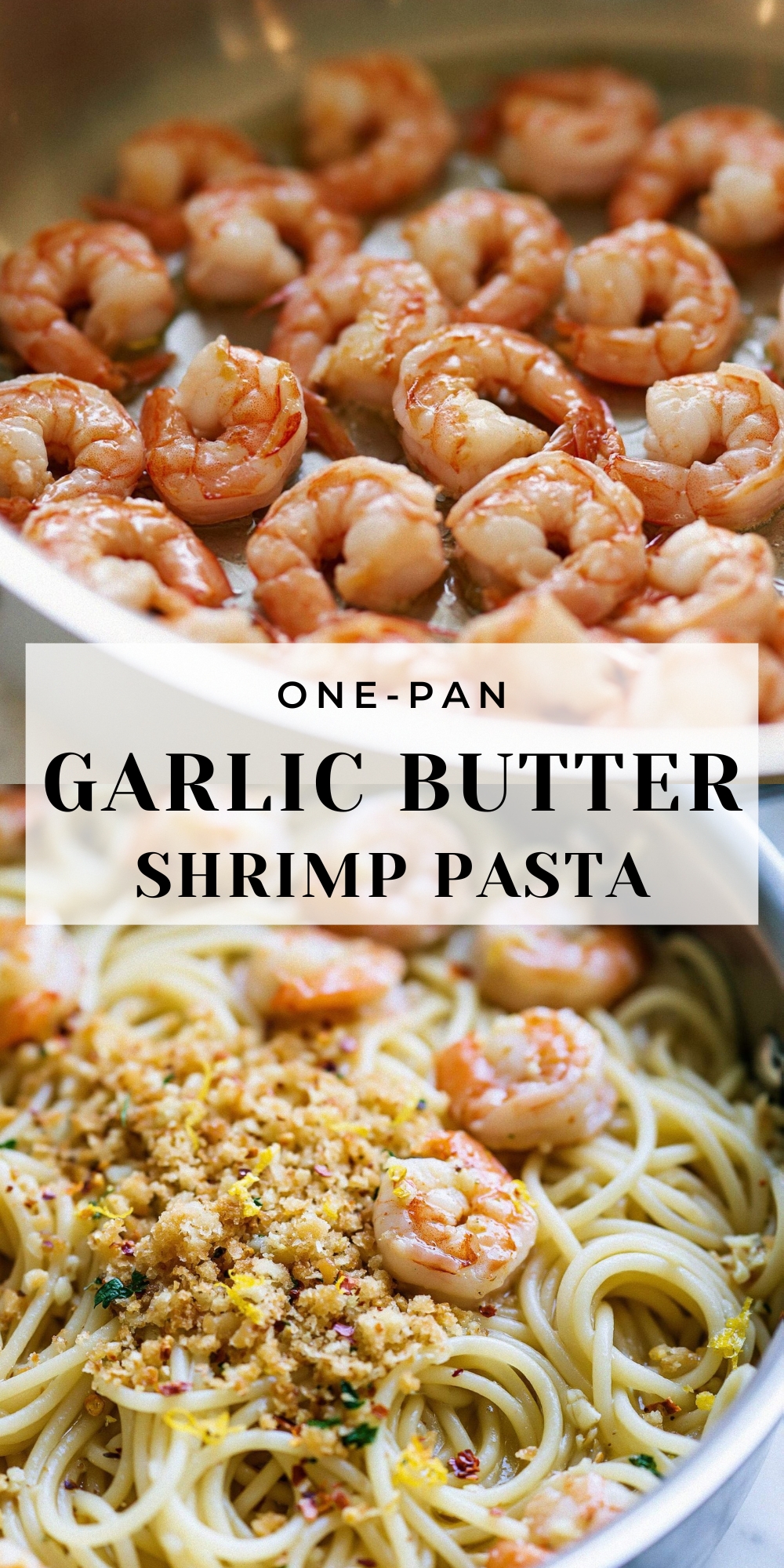
This one-pan dinner skips the heavy cream. It relies entirely on pasta water. Boiling the dry noodles right in the skillet forces their natural starches into the cooking liquid, creating a thick, glossy coating that clings to every strand. The entire process happens in a single wide pan. You get the rich texture of a restaurant dish without the sink full of dirty pots.
 This post may contain affiliate links.
The Built-In Sauce Generator
This method breaks the standard boiling rules. You start with exactly five and a half cups of water. As the liquid reduces, the starch released by the dry spaghetti forms a natural binder that emulsifies with the olive oil and butter. You have to measure the liquid accurately. Too much water leaves soup in the skillet, while too little leaves the noodles brittle.
Building the Garlic Butter Skillet
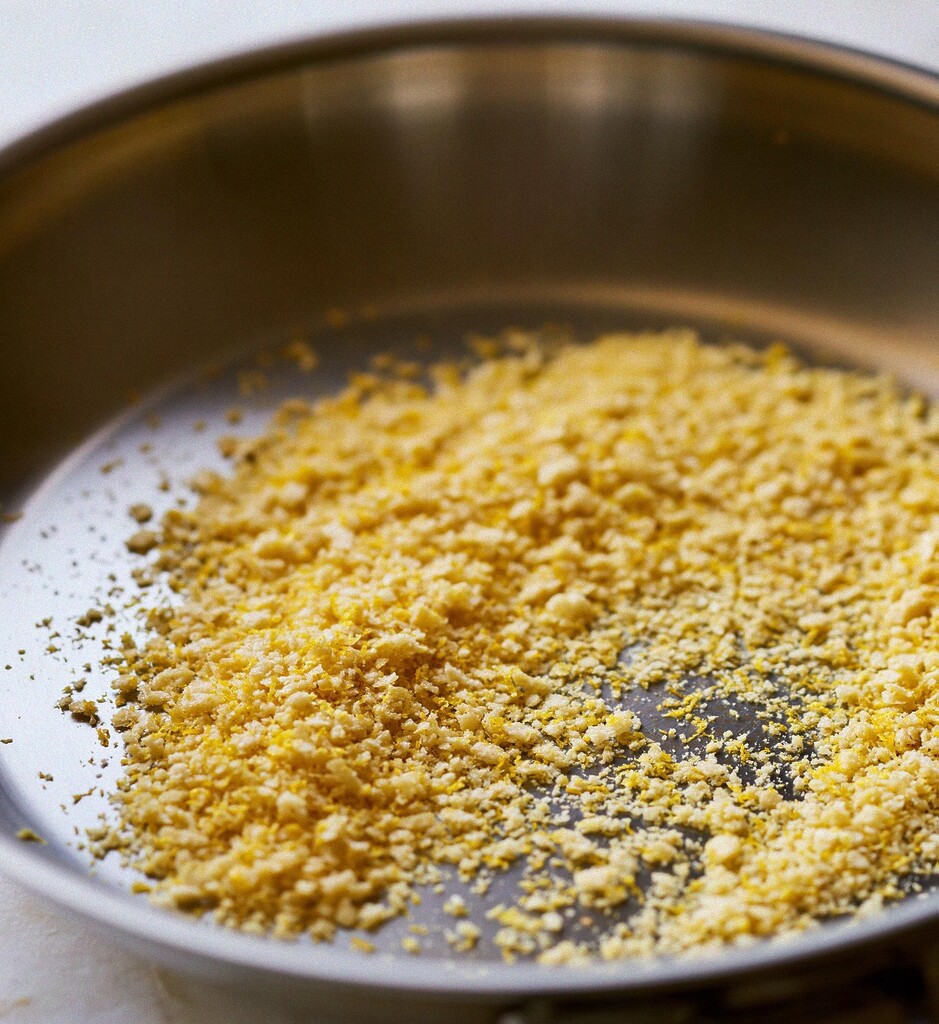
Toast the panko first. Heat one tablespoon of olive oil. Add the half cup of panko and stir constantly for two to three minutes. I dump the crumb mixture into a bowl the second it hits the color of a brown paper bag. Leaving it in the hot skillet off the heat will scorch the bottom layer instantly.
Sear the shrimp next. Pat the peeled shrimp completely dry. Drop them into two tablespoons of hot olive oil and one tablespoon of melted butter in a single layer. Let them cook for one to two minutes per side until they reach an internal temperature of 145°F. Move the cooked seafood to a plate. Do not wipe out the pan.
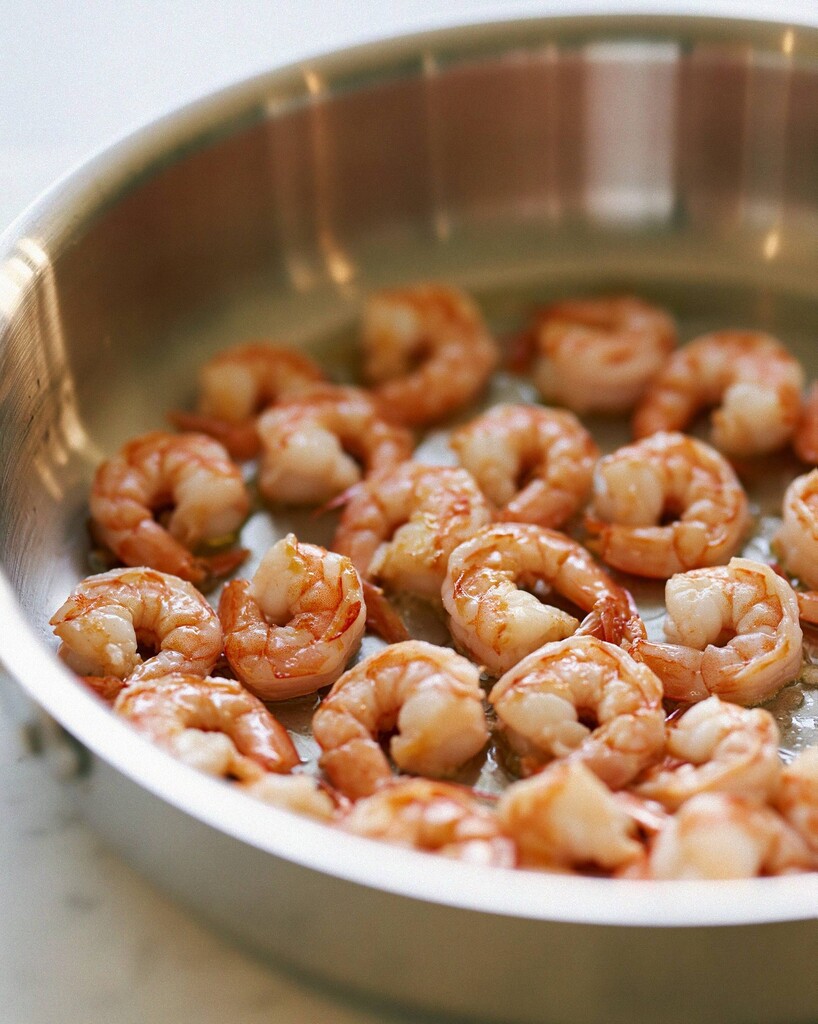
Leaving the cooked shrimp juices in the pan builds the savory base for the pasta liquid.
Simmering the Spaghetti
Melt the remaining four tablespoons of butter on medium-low heat. Add the minced garlic and crushed red pepper flakes. Stir for thirty to forty-five seconds until fragrant, taking care not to let the garlic edges brown. Pour in the water and bring it to a rolling boil. Break the dry pasta in half and drop it in.
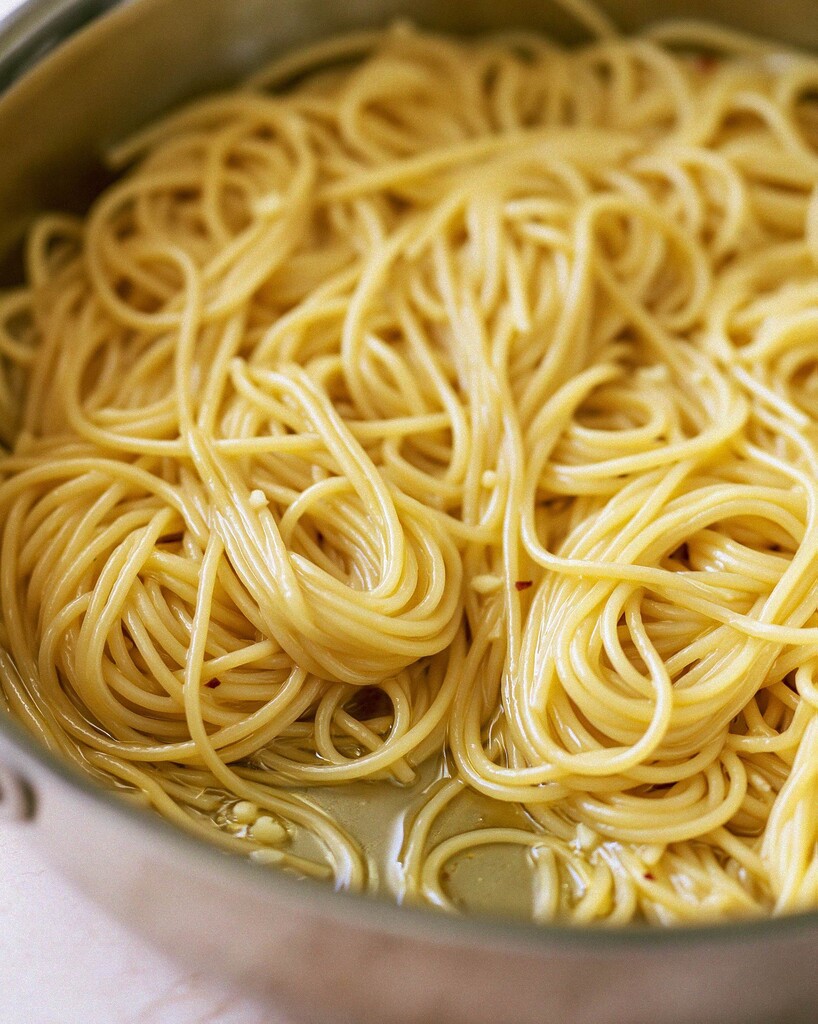
Don’t walk away from the stove. Drag your tongs through the noodles constantly. The shallow liquid makes the strands prone to sticking together if they sit undisturbed. Check the skillet after ten to twelve minutes of boiling. I watch for a thin, syrupy layer of liquid at the bottom of the pan to tell me the starch has reduced enough to bind. If I see a pool of thin water, I keep boiling. If the pan looks completely dry before the noodles soften, I splash in a quarter cup of tap water to keep the emulsion going.
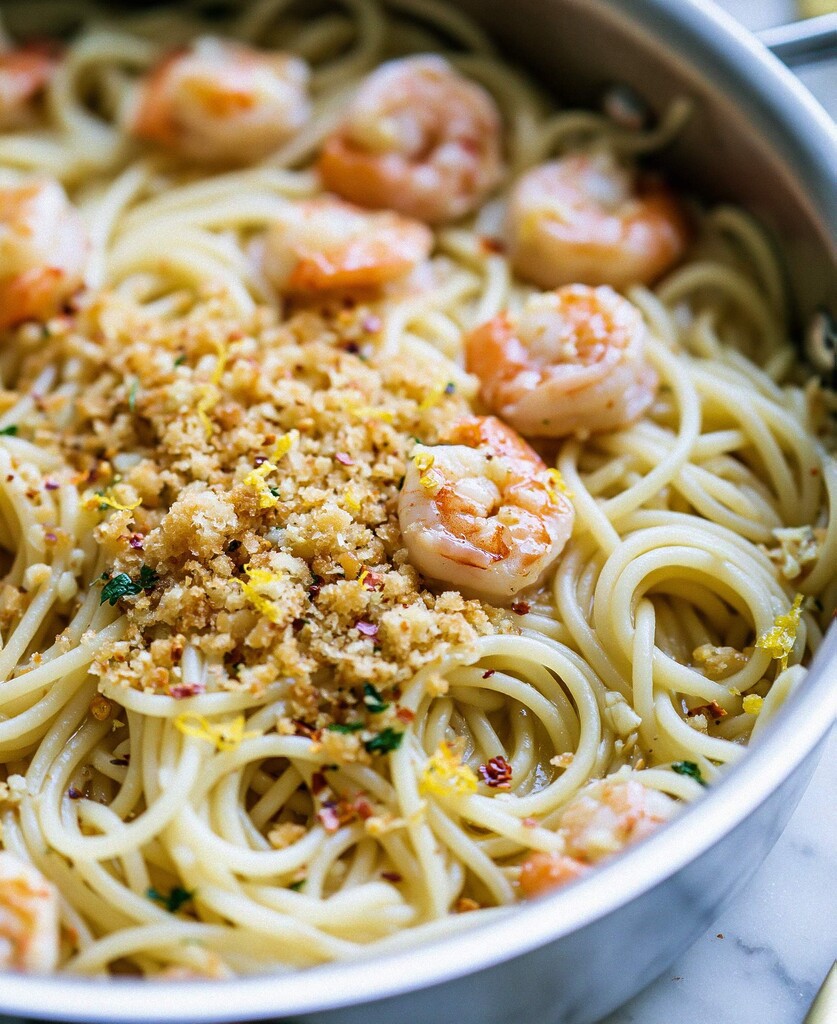
Toss the cooked shrimp back into the skillet. Squeeze in two tablespoons of fresh lemon juice. Stir vigorously to bind the remaining liquid into a smooth glaze.
Storing Your Skillet Dinner
- Keep the cooled pasta in an airtight container in the fridge for up to three days.
- Reheat individual portions gently on the stove with a splash of water to revive the butter emulsion.
- Store the toasted lemon panko separately in a dry pantry container so it stays crisp.
Common Questions About the Stovetop Process
Can I use frozen shrimp?
Thaw them completely under cold running water and pat them bone-dry before searing. Excess moisture will steam the seafood in the pan instead of browning it.
What happens if my garlic burns?
Wipe the skillet clean and start over with fresh oil and butter. Burnt garlic turns the entire liquid base bitter, and the lemon juice will not mask the taste.
One-Pan Garlic Butter Shrimp Pasta with Lemon-Panko Crunch
This streamlined skillet dinner relies on a brilliant technique: boiling the dry spaghetti directly in the pan so its natural starches build a glossy, luxurious sauce right before your eyes. Finished with plump shrimp and a bright, crispy lemon-panko topping, it delivers restaurant-quality texture without the pile of dishes.
- Total Time35 minutes
- Yield6 servings 1x
Ingredients
Lemon-Panko Crunch
- ½ cup panko breadcrumbs
- 1 tablespoon olive oil
- 1 medium lemon, zested (save the juice for the pasta)
- Pinch of kosher salt
Shrimp & Pasta
- 1 ¼ pounds (565 g) large shrimp, peeled and deveined
- 2 tablespoons olive oil
- 5 tablespoons (70 g) unsalted butter, divided
- 6 large garlic cloves, minced
- ½ teaspoon crushed red pepper flakes
- 5 ½ cups (1.3 L) water or low-sodium chicken broth
- 1 (16-ounce / 454 g) box spaghetti
- 1 ½ teaspoons kosher salt, plus more to taste
- ½ teaspoon ground black pepper
- 2 tablespoons fresh lemon juice
- ½ cup loosely packed fresh parsley, finely chopped
Instructions
- Toast the panko: Heat 1 tablespoon olive oil in a large, deep skillet or Dutch oven over medium heat. Add the panko and stir constantly until golden brown and toasted, 2 to 3 minutes. Transfer to a small bowl and stir in the lemon zest and a pinch of salt. Wipe the skillet clean.
- Sear the shrimp: Return the skillet to medium-high heat. Add the remaining 2 tablespoons olive oil and 1 tablespoon of the butter. Pat the shrimp completely dry and add them to the pan in a single layer. Sear until pink and cooked through (reaching an internal temperature of 145°F), about 1 to 2 minutes per side. Transfer the shrimp to a plate and set aside.
- Bloom the aromatics: Lower the heat to medium-low. Add the remaining 4 tablespoons of butter to the warm skillet. Once melted, add the minced garlic and crushed red pepper flakes. Cook, stirring constantly, just until fragrant, about 30 to 45 seconds. Do not let the garlic brown.
- Boil the pasta: Carefully pour in the 5 ½ cups water. Add the kosher salt and black pepper, and turn the heat to high to bring the liquid to a rolling boil. Break the spaghetti in half and scatter it into the pan. Cook uncovered, stirring frequently with tongs to keep the noodles submerged and prevent sticking. Boil until the pasta is al dente and the liquid has reduced into a thickened sauce coating the noodles, 10 to 12 minutes.
- Finish the dish: When the pasta is tender and only a thin layer of starchy liquid remains at the bottom of the pan, remove the skillet from the heat. Stir the cooked shrimp (and any resting juices) back into the pasta along with the fresh lemon juice and chopped parsley. Toss vigorously to emulsify the sauce.
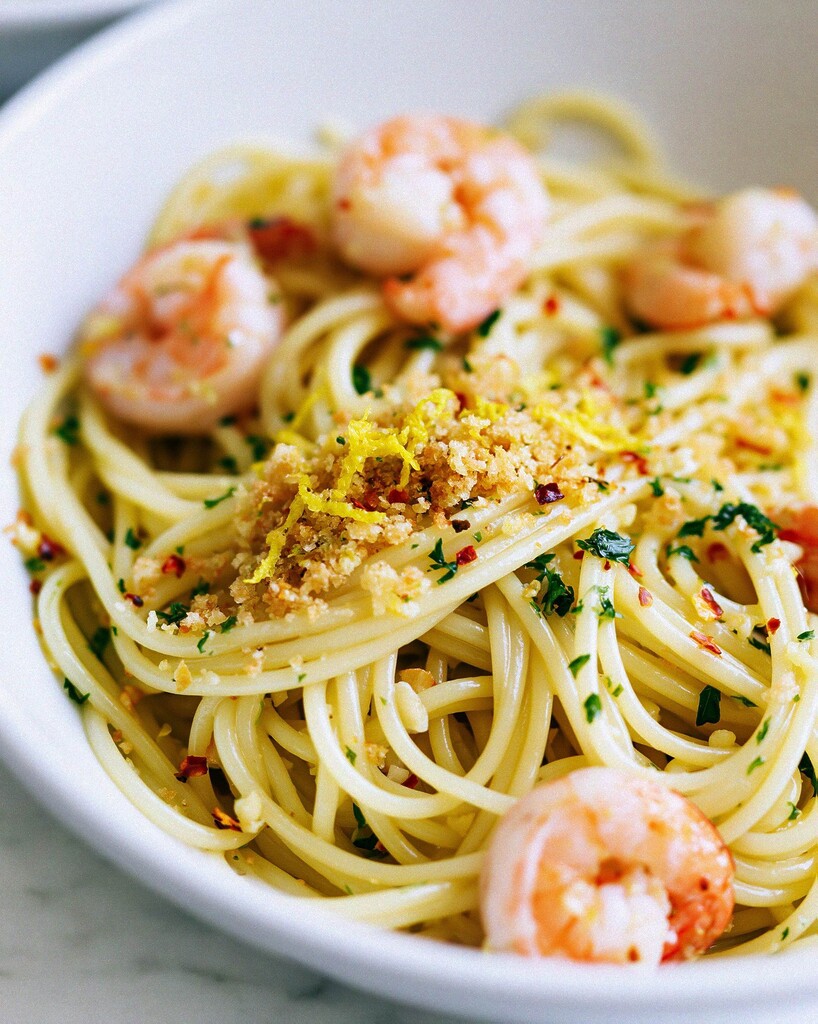
- Serve: Taste for seasoning, adding more salt if needed. Divide among shallow bowls and top generously with the lemon-panko crunch.
Notes
- Why it works: By cooking the dry pasta directly in a measured amount of liquid, the noodles release their surface starches straight into the pan. Tossed with the butter and oil, this starch acts as a natural binder, creating a creamy, emulsified sauce without relying on heavy dairy.
- Liquid check: Evaporation rates vary wildly based on your stove’s power and the width of your pan. If the skillet looks entirely dry before the spaghetti is perfectly tender, splash in another ¼ cup of water. If it looks too soupy when the pasta is done, continue boiling for another minute or two.
Calories: 530 | Total Carbs: 58g (Fiber: 3g, Sugar: 2g) | Fat: 20g (Saturated: 7g) | Protein: 31g
Nutritional values are approximate, based on standard reference data (USDA FoodData Central). Actual values vary by brand and exact measurements. For precision, use a tracker like MyFitnessPal or Cronometer.
- Prep Time: 15 minutes
- Cook Time: 20 minutes
- Category: Main Course
Nutrition
- Serving Size: About 1 ½ cups
- Calories: 530
- Sugar: 2g
- Fat: 20g
- Saturated Fat: 7g
- Carbohydrates: 58g
- Fiber: 3g
- Protein: 31g
Serve this immediately while the skillet is still hot. The crumb topping softens fast once it hits the wet noodles.


1 Comment
Absolutely loved this! The one-pan method actually worked perfectly. The sauce got so glossy and creamy just from the pasta starch and butter, and that lemon-panko topping is a total game-changer. Plus, only having to wash one skillet on a weeknight is a massive win. Will definitely be making this regularly!